
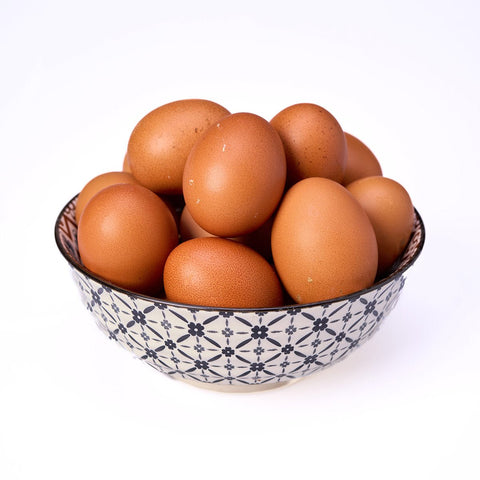
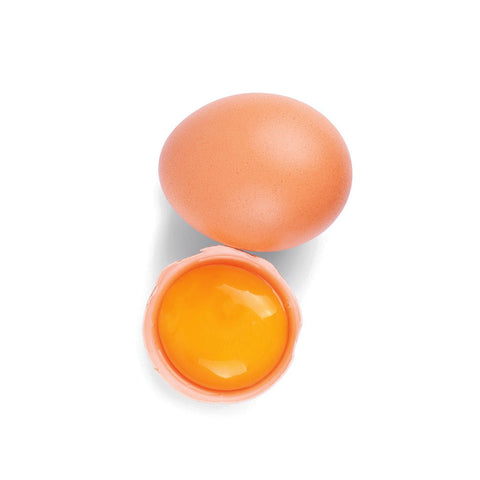


Nu'ovo: fresh eggs "with Goji and Moringa"
In stock, delivery in 1-4 business days
Damaged parcel? Write to us within 48 hours and we will sort it out. Returns and refunds
We make it ourselves in the Sibari plain


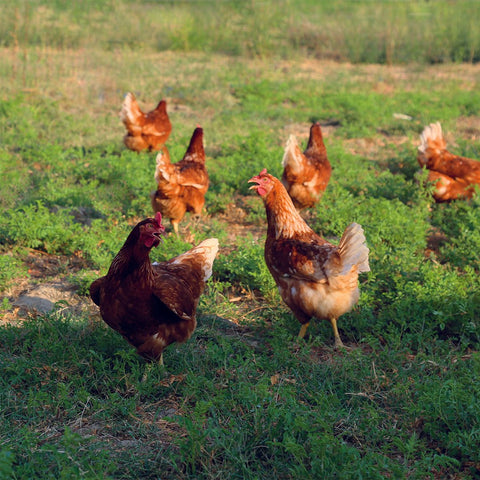
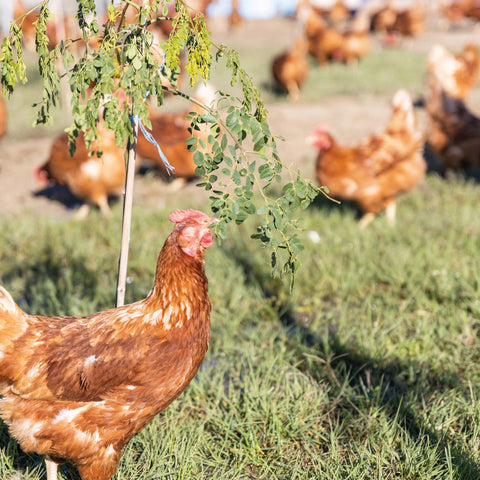
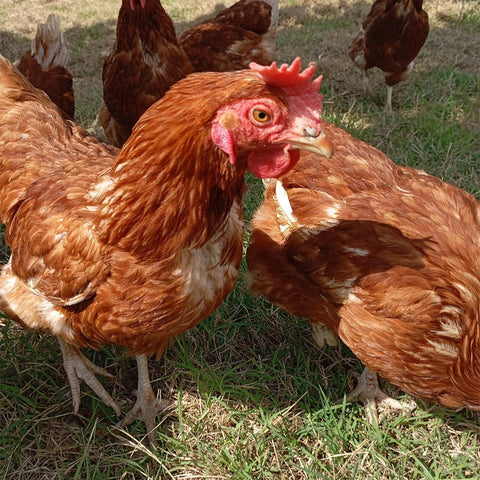
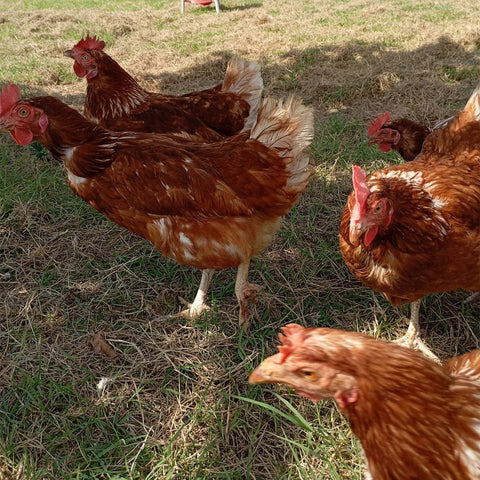
NU'OVO is born from our hens that roam freely on the ground on our farm and are fed with goji berries and Moringa oleifera leaves, grown in our own fields.
This special diet gives our fresh eggs a high content of carotenoids, nutrients with antioxidant effects. For this reason, Nu'ovo is a nutraceutical food, halfway between a food and a medicine.
Research from the University of Naples Federico II
For many years, researchers have been looking for the best way to enrich the egg of laying hens. Our farm has been cultivating goji berries and the Moringa oleifera tree for over a decade, both natural antioxidants and anti-inflammatory plants. From this came the idea of feeding the laying hens with a feed mix enriched with goji flour and Moringa oleifera flour, both produced on our farm. The study, led by Prof. Montesano, showed, after more than a year of work, that the levels of carotenoids present in our fresh egg are significantly higher than in a traditional egg, between 400 and 800 percent more.
Read the research
Research from the University of Perugia
Following the confirmation of our agronomic choice of using goji berries, we started a collaboration with the University of Perugia, which lasted three years and focused on identifying any particular characteristics compared to goji berries produced in China. The results showed, as highlighted in the study, that the amount of zeaxanthin dipalmitate is significantly higher in our berries than in Chinese ones. Zeaxanthin dipalmitate is a carotenoid with important antioxidant and anti-inflammatory effects.
Read the research
The opinion of Dr. Sponsiello
Medical doctor, specialist in food science – European Sport Nutrition Society
In the scientific world, language evolves rapidly; some years ago a new word was coined: nutraceutical, a fusion of two existing terms, which identifies foods enriched to obtain specific effects. “Nutraceutical” refers to a nutrient with pharmacological effects, so a nutraceutical is something you eat that has a strong health-oriented vocation.
A few years ago, thanks to a brilliant intuition, the idea was born to feed hens with a special blend of plant-based ingredients, very rich in beneficial substances. These particular nutrients have a documented antioxidant activity, which is important because oxidation is one of the possible pathways through which degenerative diseases may be favored; counteracting it is therefore a way to reduce the risk of getting sick.
By enriching the feed given to the hens, a fresh, tasty egg particularly rich in xanthophylls has been obtained, which, without losing its flavor and digestibility, provides us with a high dose of these beneficial substances. This turns a common food found on all our tables into a special ally for our health.
When analyzing a nutrient present in a food, three aspects must always be considered: palatability, digestibility (better called bioavailability) and effectiveness. A common example is the iron in spinach: it is there, but it is hardly absorbed, so it is of little use. In this case, we have a fresh, good egg that supplies antioxidants with excellent effectiveness and helps protect us from harmful oxidative stimuli.
Another aspect to consider, specifically in the field of antioxidants, is that taking a single antioxidant substance as a “supplement” does not work as well as taking the same substance within a food. These are called “pronutrients”, i.e. components that enhance the effectiveness of a specific substance. This is one of those cases where humans have improved something natural.
How to read the barcode on eggs
Every fresh egg tells a story of well-being and safety, coming from hens that enjoy freedom and comfort. To learn more about the meaning of the barcode on our eggs, discover the dedicated article.
A video from our fields
Eggs are a versatile kitchen staple that is full of culinary possibilities . To further enhance their flavor and your dining experience, try pairing Goji Moringa Eggs with a variety of complementary ingredients. Choose fresh seasonal vegetables for a light and nutritious dish, or opt for delicious cheeses or high-quality cured meats for a hearty breakfast or brunch. For an exotic touch, try pairing your eggs with exotic dressings or gourmet sauces for a burst of unique flavors. Experiment with different combinations and unleash your creativity in the kitchen !
- Chicken eggs
Egg
- Energy: 518 kJ / 124 kcal
- Fat: 8.0 g
- Carbohydrates: 0.85 g
- Protein: 12.0 g
- Carotenoids: 0.003 g
After purchase, store in the refrigerator
28th day after the date of laying
Always
The product does not contain genetically modified organisms
- Anyone
- Vegetarians


From our land to your table
We grow everything ourselves, on our 240 hectares in the Sibari Plain and in our greenhouses powered by clean energy. We harvest and process the ingredients within a few hours of picking, almost entirely by hand, just as our grandmothers used to do, to preserve their aromas and properties. No GMOs, preservatives, colourings or flavour enhancers: just what the Calabrian soil provides. And we respect it, because thanks to the renewable energy we generate, every one of our products is produced with zero CO₂ emissions.
Frequently Asked Questions
Nu’ovo is our fresh egg, produced by hens reared on a special diet based on goji and moringa grown on our own land. This approach enables us to offer a product that stands out from ordinary eggs, with a more closely monitored supply chain and a strong agricultural identity. It is not just a ‘good’ egg, but a project that combines poultry farming, animal nutrition and research into the value of the final product. Find out more here: What is Nu’ovo and why is it different from other eggs?
Nu’ovo is highly regarded because it is produced through a carefully managed supply chain and a feed regime for the hens designed to enhance the egg’s nutritional profile. The product page and the page dedicated to the project particularly highlight the presence of carotenoids and the antioxidant properties associated with this type of diet. In short, it is an egg designed for those seeking quality, freshness and a more beneficial nutritional profile than a standard product. Find out more here: What are the benefits of eating eggs? and What is Nu’ovo and why is it different from other eggs?
Over time, we have developed a packaging technique specifically designed to protect the eggs during transport. Each egg is individually wrapped to minimise the risk of breakage, and dispatch is arranged at the start of the week to avoid unnecessary delays. In the rare event of breakage, we assume the risk and offer a commercial solution for reordering.
Yes, Nu’ovo’s hens live outdoors, in fenced-off areas designed for their safety, with a henhouse where they can take shelter when it rains or gets cold. For us, animal welfare is not just a minor detail: it means allowing the hens to follow their natural rhythms, providing a protected environment and ensuring more balanced living conditions. This is also why production remains limited and aligned with their natural rhythm. Find out more here: What ‘free-range eggs’ mean.
The best eggs to buy aren’t chosen simply by looking at the price or a word on the label, but by considering freshness, traceability, animal welfare, the hens’ diet and the producer’s reliability. That’s why Nu’ovo focuses entirely on limited-scale production that is direct and consistent with our farming philosophy. When an egg comes from a well-managed farm, a transparent supply chain and swift delivery, you can really tell the difference. Find out more here: What are the best eggs to buy?
The number of eggs you can eat each day depends on your overall diet, lifestyle and individual circumstances. Generally speaking, many people happily include eggs as part of a balanced diet, taking into account their other sources of protein and fat throughout the week. The point is not to demonise eggs, but to put them into context within your daily eating habits. Find out more here: How many eggs can you eat a day?
For many healthy people, eating eggs every day can form part of a varied and balanced diet. It is the quantity, frequency and overall quality of the diet that make the real difference, not simply the fact of eating eggs every day. If you have any particular needs or specific medical advice, it is always best to tailor your diet accordingly. Find out more here: Is it safe to eat eggs every day?
Eggs and cholesterol should no longer be viewed in such simplistic terms as they once were. Nowadays, the focus tends to be on the overall picture of one’s diet, lifestyle and individual metabolic profile. This means that, even if you have high cholesterol, egg consumption should be assessed using common sense and without jumping to conclusions, ideally as part of a balanced diet. Find out more here: Eggs and cholesterol: can people with high cholesterol eat them?
There are several ways to tell if an egg is fresh: the time elapsed since it was laid, the condition of the shell and, once cracked open, the firmness of the white and yolk. Even the famous float test can provide a useful indication, if interpreted correctly. In the case of Nu’ovo, the fact that collection and dispatch are concentrated at the start of the week helps to maintain a very high level of freshness. Find out more here: How can you tell if eggs are fresh? and How to tell if eggs are fresh using the float test.
Fresh eggs retain their qualities best when stored correctly and eaten within a reasonable time of being laid. In the case of Nu’ovo, the eggs are collected at the start of the week specifically to ensure the product is as fresh as possible when dispatched. This makes it even more important to store them correctly once you have received them. Find out more here: How long do fresh farm eggs last?
Storing eggs is a more delicate matter than it seems, and it shouldn’t be reduced to a simple yes or no. On our blog, we explain why the key is to avoid sudden changes in temperature and to ensure consistent, clean and stable storage conditions. That’s why it’s best to follow a specific set of guidelines from the moment you receive the eggs right through to when you eat them. Find out more here: Why shouldn’t you put eggs in the fridge?
Nu’ovo is often available in limited quantities because we prefer to respect our hens’ natural rhythm rather than forcing production. On average, we produce around 500–600 eggs a week, collected between Monday and Tuesday morning to ensure they stay fresh. This means that at weekends or during periods of high demand, the product may sell out more quickly. To find the most up-to-date stock levels and make the most of our weekly supply, we recommend shopping on Tuesday afternoon or Wednesday morning.